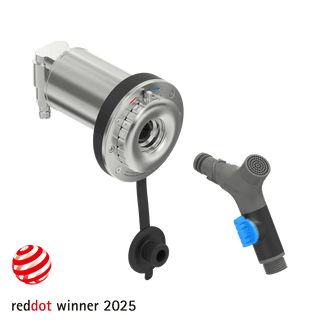
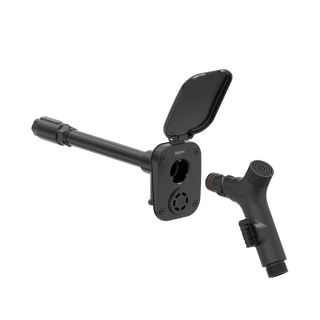
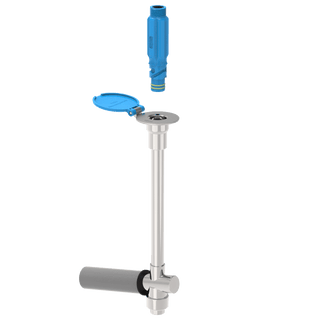

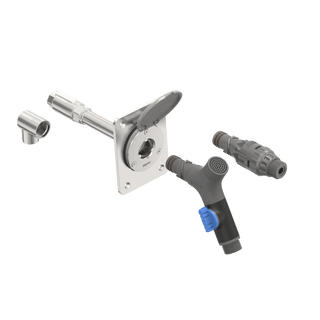
Did you know you can swap out the standard inlet that comes with your hydrant? Perhaps you want to connect to PEX, and/or attach a 90° elbow.
First, twist off the included 1/2” NPT Straight Inlet from the back of the hydrant body.
Then, attach your preferred Aquor inlet.
Our elbow inlets shorten the overall hydrant length by 1/2 inch, perfect for tight spaces and in-wall plumbing. This type of inlet can be positioned in any direction due to a unique O-ring seal.
Tighten fully, then back off to the desired placement (up to 360°, 1 rotation). Pretty nifty!
Living in MInnesota I have encountered many issues with my spigots. This last year or two both of them have become a game to try to turn the water on without being drenched from the leaked spraying water coming at you. I came across these. I believe these will be the solution I'm looking for. Of course I chose the wrong wknd (Below 0 not counting wind chill) to install. I felt, even below zero, that the installation process couldn't have been easier. Granted, yes I did make another two or three trips to Home Depot, but if I had experience I felt it would have taken maybe 20-30 minutes. It's January here tomorrow so I have not tried the hydrants yet, however I can see the good quality and smart design that I am pretty sure I'm not going to experience any issues with this product. Also kind of saddened that I didn't think of this product myself. Genius!
I’m trying to cure a reoccurring issue we have had with customer home construction. Here in Texas no one listens to the warning to disconnect the hoses when the temps start to fall. On a typical frost free hydrant the copper tube splits and when it gets used again water floods the house causing substantial damage. Recently I had a frost free that the connection between the hydrant and the drop ear 90 leaked and slowly damaged the floors inside the house. So I’ve taken upon myself to remedy both issues. I’ve know about your hydrants but never installed one. Even my plumber was reluctant to try.
I’ve developed a way to eliminate both problems. Only suggestion is that I would make your hydrants with a male pipe thread instead of a female so it would be an exact replacement for the typical hydrant and it would eliminate one possible leak point.